

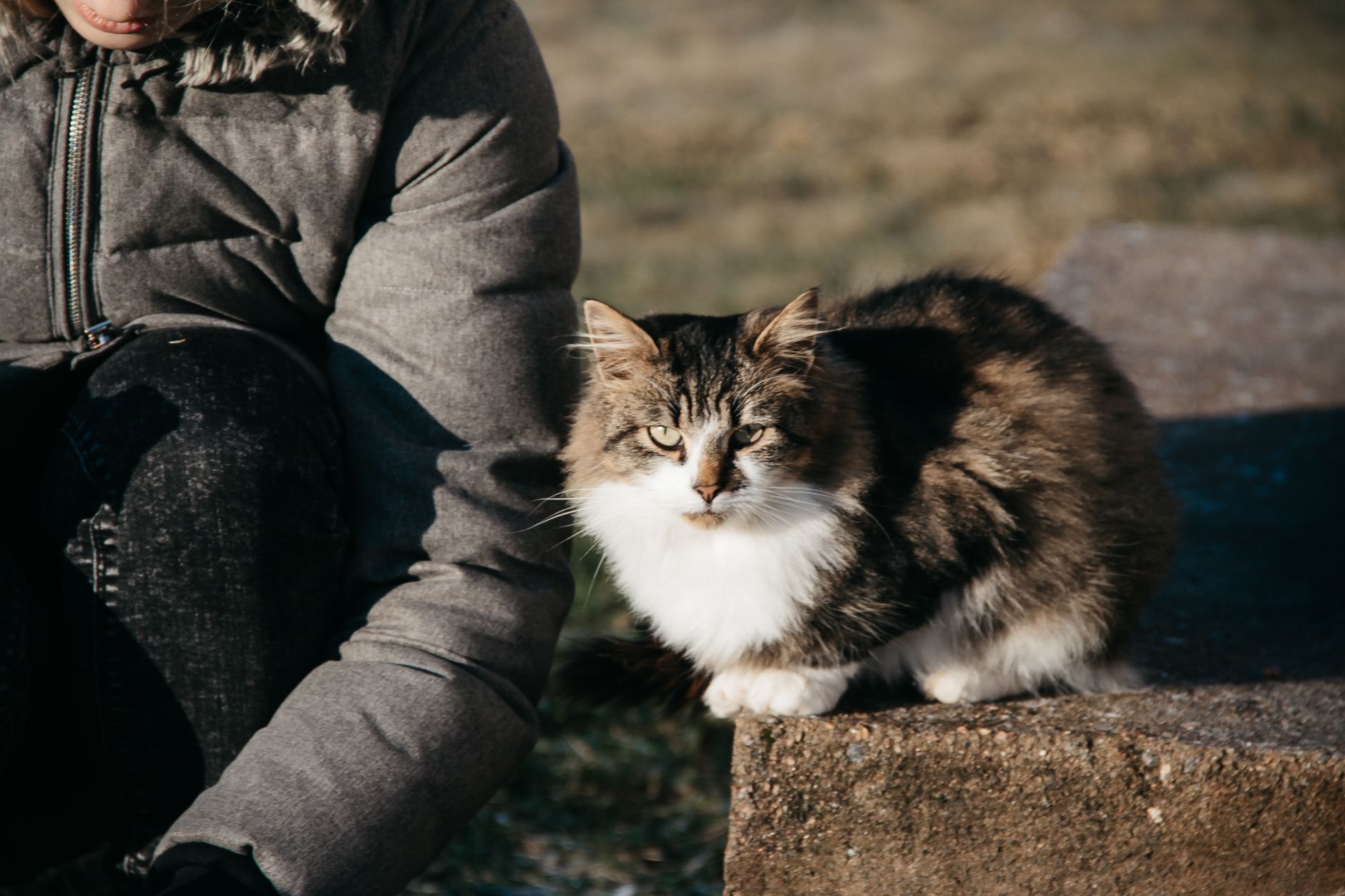
It is the quietest warning an older cat gives. The bowl needs filling more often and the litter has heavier clumps. Owners notice and do not act, because nothing about it looks like illness. It is the earliest sign of the most common serious problem in older cats, and noticing it early genuinely changes the years that follow.
Why the warning comes so late
Kidneys have an enormous amount of spare capacity, and they use it. By the time the standard kidney value on a blood panel climbs out of the normal range, a substantial majority of working kidney tissue has usually already been lost. A cat at that point still looks well at home, still eats, still purrs.
That is not an argument that testing is pointless. It is the argument for testing earlier and for testing more than one thing, because there are markers that move sooner. The kidneys usually start losing the ability to concentrate urine before the blood value shifts, which is why the drinking changes first — the cat is compensating for urine that has become too dilute. There are also newer blood markers that move well before the traditional one.
So the water bowl is not a vague clue. It is the body telling you about something the usual blood test cannot see yet.
What else to watch for
- Drinking more. Measurably, not just noticeably. A cat who has started standing at a running tap, or who drains the bowl when they never used to.
- Heavier or more frequent clumps in the litter, or a cat needing a second box.
- Gradual weight loss across months, often noticed as the spine and hips becoming easy to feel.
- A duller, flakier coat and less grooming.
- Appetite drifting down, or becoming picky about food they always ate.
- Occasional vomiting, and bad breath that is not coming from the teeth.
- Sleeping more and interacting less, which is almost always put down to age.
The weight loss is worth dwelling on. A thin older cat is not simply an old cat. Three of the common conditions in this age group produce it, and they are told apart on a blood and urine sample rather than by looking.
The sample most owners do not know to bring
Urine. In an older cat it answers questions the blood cannot, and it is the part most often left out because nobody mentioned it before the appointment.
Urine shows how well the kidneys are concentrating, which is an early signal. It shows whether protein is leaking, which changes the plan. It picks up sugar, which points somewhere else entirely. And it finds infections that produce no obvious signs in an older cat.
If you can catch a sample the morning of the visit, do. Non-absorbent litter works, or an empty tray. Aim to get it to us within a couple of hours, and put it in the fridge as soon as you have it. Tell us when you collected it, because some of what we see in a stored sample — crystals in particular — is not the same as in a fresh one. If that is not realistic, say so and we will collect one here.
Our in-house blood work and urinalysis is where this gets answered, usually during the same visit. A wellness visit with a baseline panel taken while your cat is well is what makes a later result readable instead of a guess. Our medical services handle the ongoing management, which is where most of the real benefit lives.
What changes if you catch it early
This is manageable rather than curable, and that distinction is less bleak than it sounds. Cats found early and managed properly commonly live comfortably for years, and the levers are mostly practical:
- Water intake is the one you control most. More bowls, in more places, away from the food. Wide shallow bowls and running fountains both get more cats drinking.
- Wet food does more than any bowl. If your cat eats only dry, adding wet meals is the most effective way to raise water intake, and we can help you make the switch without a food strike.
- A specific diet, chosen on what the blood and urine actually show rather than bought off a shelf.
- Blood pressure checked, because high blood pressure in older cats travels with kidney trouble and quietly damages eyes, heart and brain.
- Regular rechecks, so the plan tracks the cat rather than a result from a year ago.
What we are aiming at is a cat who eats, drinks, keeps weight on and stays interested. That is a realistic target for a long time, and it is much easier to hit from an early start than from a crisis.
Our hours
We are open Monday to Friday from 8:00 am to 9:00 pm and Saturday and Sunday from 9:00 am to 6:00 pm, with most statutory holidays from 9:00 am to 6:00 pm. Our hours can change depending on doctor availability, so please call to confirm before you set off.
Nothing in this article is an emergency, and a drinking change is an appointment rather than a dash. A cat who has stopped eating altogether, is vomiting repeatedly, is weak, or is straining in the litter box without producing urine is different and needs to be seen the same day. If that happens when we are closed, go to an open emergency hospital rather than waiting.
Common questions
How much drinking is too much for a cat?
Measure rather than guess. Fill the bowl with a measured amount, top it up with measured amounts over twenty-four hours, and tell us the total. An actual number beats “a lot” every time, and it also tells us whether it is changing.
My cat is sixteen and seems happy. Is testing worth it?
Yes, and arguably more so. The question at sixteen is not whether something will turn up but which thing, and knowing lets you keep the cat comfortable instead of reacting to a crisis.
Is this painful for them?
Not in the way owners fear. What cats feel is nausea, dehydration and a gradual loss of condition, and a good deal of that is manageable. Nausea in particular is manageable, and it is often what makes a cat stop eating.
Does dry food cause it?
Dry food does not cause it. Low water intake makes everything about it harder to manage, which is why we push wet food once it is diagnosed.
Both my cats are the same age. Should I test both?
If they are both over seven, a baseline on each is sensible. Having last year’s number for the cat who seems fine is what makes this year’s number mean something.
Speak to the team at Family Pet Hospital
If you are filling the bowl more often than you used to, book a visit and bring a morning urine sample if you can manage one. It is the cheapest useful thing you can do for an older cat.
Published by the team at Family Pet Hospital.
This article is educational in nature and is not a replacement for hands-on assessment of your own pet by a veterinarian.
Family Pet Hospital
Unit 3, 7319 Vedder Road, Chilliwack, BC V2R 4E4
Phone: (604) 824-0005
Hours: Monday to Friday 8:00 am to 9:00 pm; Saturday and Sunday 9:00 am to 6:00 pm; most statutory holidays 9:00 am to 6:00 pm